
Running a business in the UAE can feel like walking a tightrope, especially when it comes to taxes and compliance. Many business owners struggle with VAT return filing, unsure about rules, deadlines, and calculations. The good news is that once you understand the process, it becomes much easier to manage.
If you are wondering how to file VAT return in UAE, this guide will walk you through everything in a simple and practical way. From understanding VAT basics to submitting your return correctly, this beginner-friendly guide covers it all so you can stay compliant and avoid penalties with confidence.
What is VAT Return in UAE
Understanding VAT return in simple terms
A VAT return is a report that businesses submit to the Federal Tax Authority showing how much VAT they collected and how much they paid. It helps the government calculate whether you owe tax or are eligible for a refund.
This process ensures transparency and keeps your business aligned with UAE tax regulations. Filing regularly is not optional, it is a legal requirement for registered businesses.
Difference between input VAT and output VAT
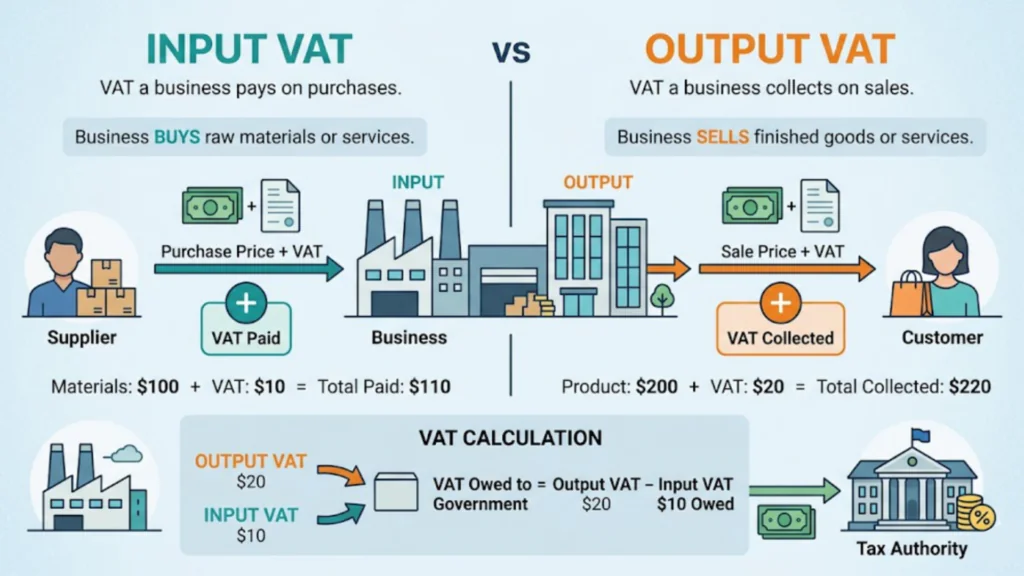
Understanding these two terms is very important:
- Output VAT is the tax you charge your customers on sales
- Input VAT is the tax you pay on your business expenses
If your output VAT is higher, you pay the difference. If input VAT is higher, you may claim a refund.
Who Needs to File VAT Return in UAE
Mandatory VAT registration threshold
Businesses must register for VAT if their taxable supplies exceed AED 375,000 annually. Once registered, filing VAT returns becomes compulsory.
Failing to register or file returns can lead to heavy penalties, so it is important to monitor your revenue closely.
Voluntary VAT registration explained
If your revenue exceeds AED 187,500, you can register voluntarily. This is useful for startups and small businesses that want to claim input VAT and appear more credible.
VAT Return Filing Deadline in UAE
Monthly and quarterly filing rules
Businesses in the UAE are assigned either:
- Monthly filing period
- Quarterly filing period
This depends on your business size and instructions from the tax authority.
Important due dates businesses must know
VAT returns must usually be filed within 28 days after the end of the tax period. Missing deadlines can result in fines even if no tax is due.
Documents Required to File VAT Return
Essential financial documents checklist
Before filing, make sure you have:
- Sales invoices
- Purchase invoices
- Credit and debit notes
- Import and export records
- VAT calculation summaries
Why accurate records are important
Keeping proper records helps avoid errors and ensures smooth filing. Incorrect or missing data can lead to penalties or audits.
Where to File VAT Return in UAE
Introduction to EmaraTax portal
VAT returns in the UAE are filed online through the EmaraTax portal. This is the official platform provided by the government for tax-related services.
How to access your VAT account
You can log in using your registered credentials. Once inside, you can view your VAT obligations, submit returns, and make payments easily.
Step-by-Step Process on How to File VAT Return in UAE
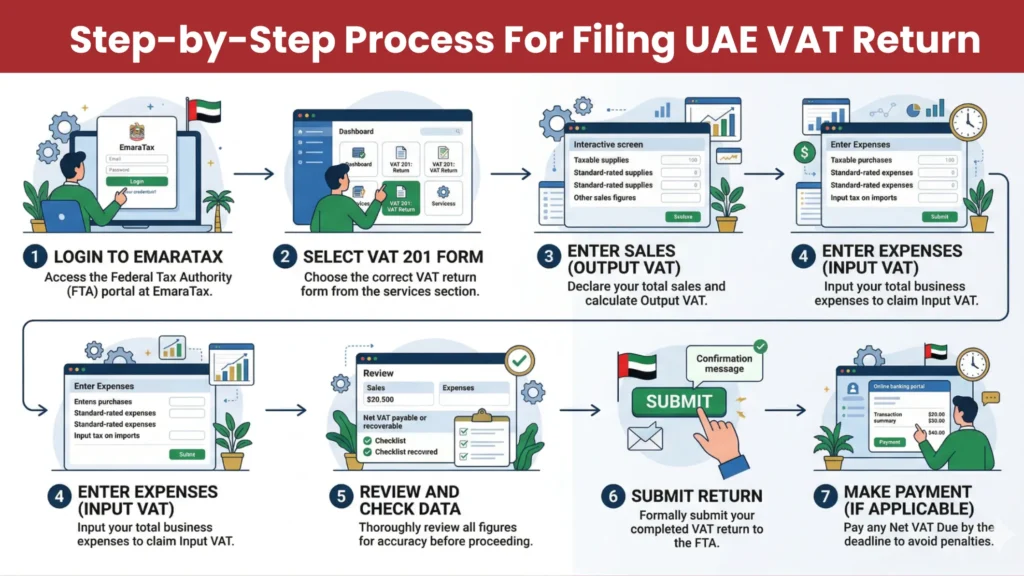
Step 1: Log in to EmaraTax portal
Go to the EmaraTax portal and log in using your username and password. Ensure your details are correct before proceeding.
Step 2: Select VAT return form VAT 201
Choose the VAT 201 form, which is the official form used for filing VAT returns in the UAE.
Step 3: Enter sales and output VAT
Fill in your total sales and the VAT collected from customers. Double-check all figures to avoid mistakes.
Step 4: Enter expenses and input VAT
Add your business expenses and the VAT you paid on purchases. This helps calculate your net VAT payable.
Step 5: Review and submit VAT return
Carefully review all entries before submission. Even small errors can lead to penalties or delays.
Step 6: Make VAT payment
If you owe VAT, make the payment through the portal using available payment options.
Understanding VAT 201 Form
Sections included in VAT return form
The VAT 201 form includes:
- Sales and output VAT
- Expenses and input VAT
- Net VAT payable
- Standard rated and zero rated supplies
How to fill each section correctly
Each section must be filled with accurate financial data. Always match your entries with invoices and accounting records to ensure accuracy.
Common Mistakes to Avoid While Filing VAT Return
Incorrect VAT calculations
Calculation errors are one of the most common issues. Always double-check totals and use accounting software if possible.
Missing invoices and records
Incomplete records can result in incorrect filing and penalties. Keep all documents organized and updated.
Penalties for Late VAT Return Filing
Late filing fines in UAE
Failing to file your VAT return on time can result in penalties such as:
- AED 1,000 for the first offense
- AED 2,000 for repeated offenses
Additional penalties may apply for incorrect submissions.
How to avoid penalties easily
- Set reminders for deadlines
- Maintain proper records
- File returns early instead of waiting till the last day
Tips to Make VAT Return Filing Easy
Use accounting software
Accounting tools help automate calculations and reduce human errors. This makes VAT filing faster and more accurate.
Work with VAT consultants
Professional consultants understand tax laws and can guide you through the process smoothly. This is especially helpful for growing businesses.
Why Professional Help Can Save Your Business
Benefits of hiring VAT experts
VAT experts can:
- Ensure accurate filing
- Reduce risk of penalties
- Save time and effort
- Provide tax-saving insights
How auditing firms help in compliance
Working with professionals like CPA (Capital Plus Auditing) ensures your business stays compliant with UAE VAT laws. They help manage your records, file returns correctly, and keep you stress-free.
Conclusion
Filing VAT returns does not have to be complicated once you understand the process. By following the right steps, keeping accurate records, and meeting deadlines, your business can stay fully compliant and avoid unnecessary penalties.
If you still feel unsure about how to file VAT return in UAE, it is always a smart choice to get expert help. Visit capitalplusauditing.ae today and let professionals handle your VAT filing while you focus on growing your business.